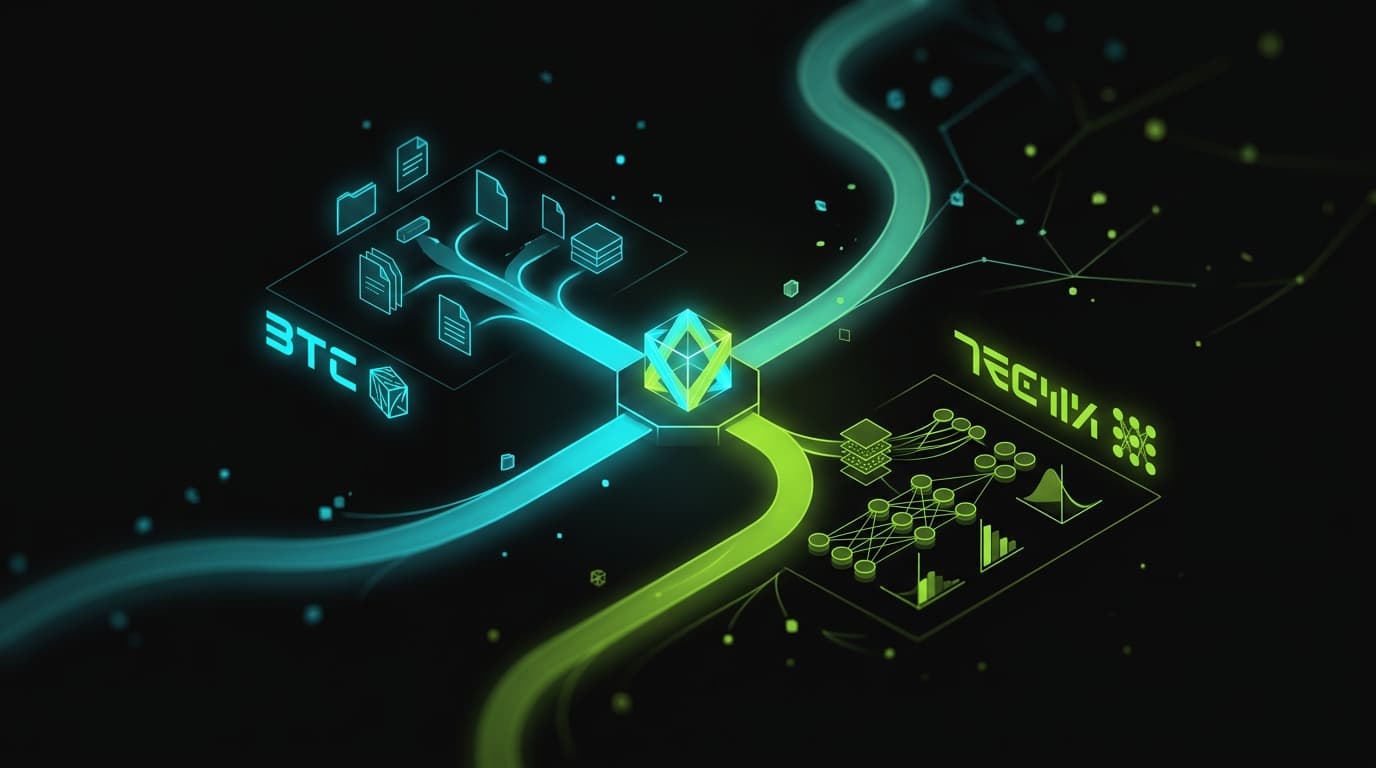
Every team building an LLM product asks the same question at some point: should we fine-tune the model, or use retrieval-augmented generation? The marketing answer is 'it depends.' The honest answer is: RAG wins 9 times out of 10.
The core difference
RAGPick | Fine-tuning | |
|---|---|---|
| What it does | Retrieves relevant docs + passes them in prompt | Modifies model weights to learn patterns |
| Update knowledge | Instant (update docs) | Requires retraining |
| Model flexibility | Works with any model | Locked to fine-tuned model |
| Cost to build | Low ($500-5K) | Medium-high ($2-20K) |
| Cost to run | Standard LLM API costs | Cheaper per call on smaller models |
| Accuracy on factual Q&A | High (grounded in docs) | Poor (facts decay, hallucinations) |
| Style / voice / format consistency | Decent with prompt engineering | Excellent |
The 4-question decision framework
Q1: Do you need to inject knowledge that changes over time?
Product docs, policies, recent data, customer info. If YES → RAG. Never fine-tune for knowledge. It decays the moment your docs update and you're stuck retraining.
Q2: Can you achieve your target output with prompt engineering?
Try it with a good prompt + few-shot examples + Claude/GPT-4 first. If you can get to 90%+ quality, you don't need fine-tuning. 80% of 'we need fine-tuning' conversations end here.
Q3: Do you have 1,000+ high-quality training examples?
Fine-tuning needs real data. A thousand examples is the floor for useful results, 5,000+ is better. If you don't have this, you can't fine-tune well regardless of desire.
Q4: Is latency or cost forcing you to use a smaller model?
This is the real fine-tuning use case. If a frontier model is too slow or expensive for your volume, fine-tune a smaller model to match its quality for your specific task. This is a legitimate reason to fine-tune.
Answer the 4 questions honestly. If you answered 'yes' to Q1 → RAG, stop. If you answered 'yes' to Q2 → prompt engineering, stop. If you answered 'no' to Q3 → you can't fine-tune well yet, so RAG for now. Only if Q4 is your actual constraint should you consider fine-tuning.
“Fine-tuning is the answer to latency problems, not knowledge problems. Using it for knowledge is a trap.”
Why teams pick fine-tuning wrong
There are 3 common reasons teams fine-tune when they shouldn't:
- 'We have unique data and want the model to know it.' This is a knowledge problem. RAG does it better, cheaper, and updates automatically.
- 'We want the model to sound like our brand.' This can almost always be achieved with a strong system prompt + few-shot examples. Fine-tuning only beats prompts when the style is extremely specific and the prompt is consuming too many tokens.
- 'We want to avoid per-call API costs.' Valid, but usually premature. Get RAG working first, measure real cost, then fine-tune if the math actually justifies it. Most teams over-estimate their scale.
When fine-tuning IS the right answer
We've fine-tuned models for clients in three legitimate cases:
- High-volume specific task (millions of calls/day) where running on GPT-4 was $40K/month but fine-tuned Llama 3 on the same task was $800/month at equal quality
- Strict latency requirement (<100ms responses) where even the fastest frontier models were too slow, requiring a fine-tuned smaller model on dedicated infrastructure
- Legal/compliance mandate requiring an on-premise model, where the baseline quality was too low and fine-tuning brought it up to usable
Notice the pattern: all three are about constraints (cost, latency, privacy), not knowledge. That's the honest use case for fine-tuning in 2026.
FAQ
Confused about the right AI architecture?
We help teams decide between RAG, fine-tuning, and prompt engineering based on actual requirements — not hype. If you're weighing an architecture decision, book a 30-minute call and we'll give you an honest recommendation.